
Caregivers: How to Engage Your Loved One Without Stress?
Being a dementia caregiver in the US is a marathon.
Between managing medications, doctors' appointments, and ensuring safety, the mental load is overwhelming. You might already rely on coordination apps like Elli Cares, CareMobi, or mySeniorCareHub to keep the daily chaos organized.
These tools are lifesavers for logistics, but caregivers often ask us: "What can I do to actually engage Mom's brain today without stressing her out?"
Brain Training for Caregivers: Reduce Stress & Brain Fog
What Dementia Care Apps Usually Do
Most top-rated dementia apps focus on care management:
- Safety: GPS tracking and SOS alerts (like Theora Link).
- Organization: Shared calendars and medication reminders (like Medisafe).
- Communication: Keeping the family loop updated.
These are essential for the body and safety, but they don't necessarily stimulate the mind.
Where Daily Brain Coach Fits
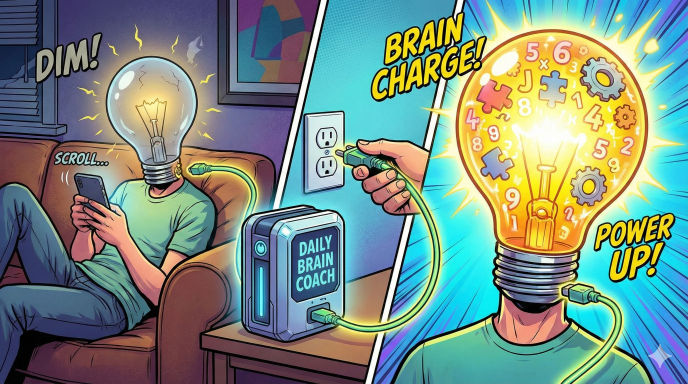
Daily Brain Coach is the missing piece of your digital toolkit. It's not about managing appointments; it's about creating a positive, stimulating moment in your day.
- Short Cognitive Workouts (2–5 min): Perfect for attention spans that might be waning.
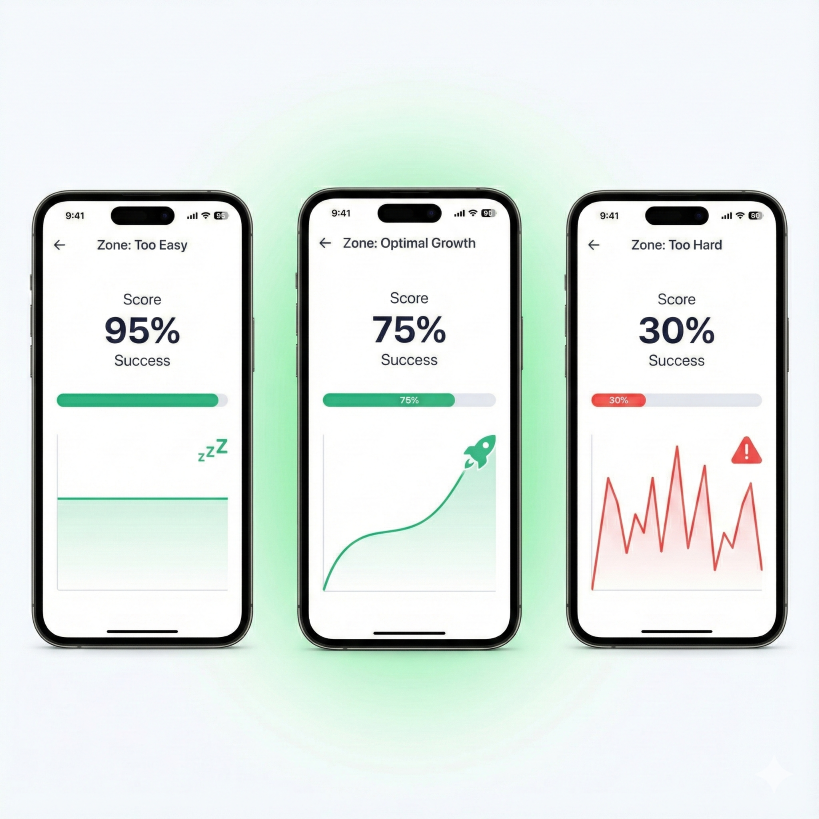
- No "Failure" Mode: Our games are designed to be frustration-free. If a level is too hard, the app adjusts instantly. This is crucial for avoiding agitation in seniors with MCI (Mild Cognitive Impairment) or mild dementia.
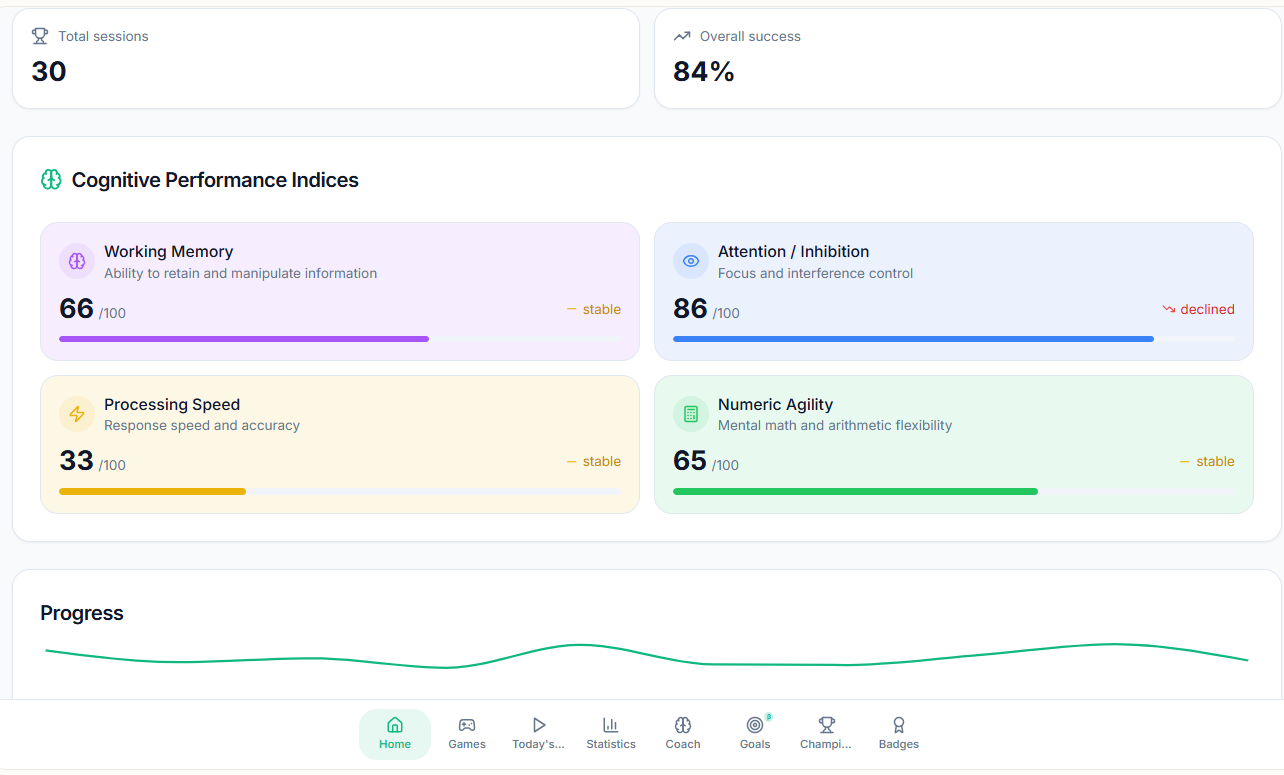
- Key Domains: We focus on visual memory, simple attention, and logic—skills that support daily independence.
Safety & Reality Check
Let's be clear: Daily Brain Coach is a wellness tool, not a medical treatment. We don't promise to cure Alzheimer's. Think of us as a gentle "physical therapy for the brain"—a way to keep neural circuits active and maintain connection.
For 10 practical brain games you can do at home, see our brain games for seniors guide.
Why Cognitive Stimulation Still Helps Even With Diagnosed Decline
A common misconception: once cognitive decline is established, training does nothing. Neuroscience nuances this in an important way.
Research on cognitive reserve (Stern, 2002, Neurology) shows that individuals with high cognitive stimulation throughout their lives display Alzheimer's symptoms later — even with identical brain lesions. This "reserve" concept suggests the brain can compensate for damage by activating alternative circuits, but only if those circuits have been trained.
For loved ones with MCI (mild cognitive impairment) or early dementia, gentle stimulation does not cure, but it can slow functional progression and maintain social and emotional connection.
Which Exercises Are Appropriate at Each Stage
| Cognitive stage | Recommended exercises | Avoid |
|---|---|---|
| Normal aging (60–75) | N-Back, Stroop, mental math | Nothing |
| Mild MCI | Word Search, simple visual pairs | Fast-paced timed exercises |
| Early dementia | Image recognition, simple pairs, 2–3 min max | Complex multi-task exercises |
Daily Brain Coach is appropriate for the first two levels. For advanced dementia, specialized tools and professional support remain necessary.
Taking Care of Yourself as a Caregiver
An often-overlooked aspect: caregivers also need to protect their own brain. Chronic caregiver stress produces cortisol which, at high levels, affects the hippocampus and accelerates cognitive aging.
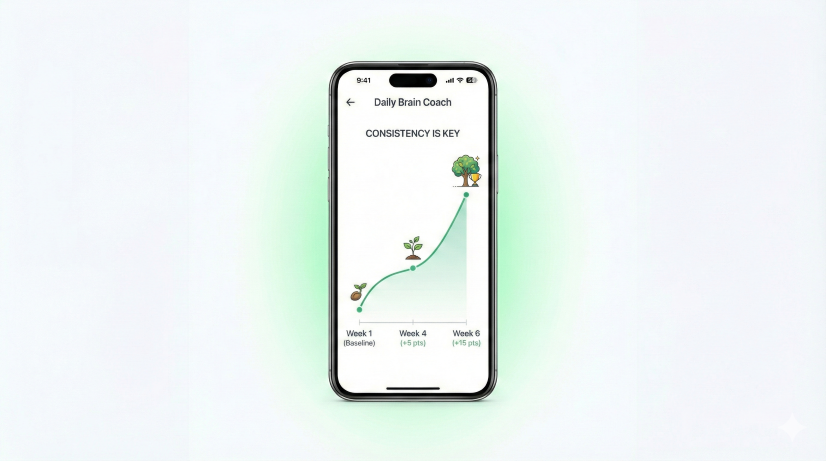
5 minutes of daily cognitive training for the caregiver themselves serves as both a mental break and long-term protection. This is not a luxury — it is prevention.
The Daily Brain Coach program offers short sessions compatible with caregiver daily life: a coffee break, a waiting room, a free moment in the evening.
Helpful Links for Caregivers
- Brain games guide for caregivers — 10 practical activities
- Cognitive indices: understanding the measures — to better interpret progress
- Daily Brain Coach free trial — no sign-up, no credit card
Start a gentle 5-minute routine with your loved one. Free trial →