
Free Brain Games for Seniors: Stimulate Memory & Focus
Free Brain Games for Seniors: Stimulate Memory & Focus
Updated June 2026. Healthy aging is no longer about "slowing decline" — in 2026, the science of neuroplasticity confirms that the senior brain can keep forging new neural pathways well into the 80s and 90s, provided it gets the right kind of stimulation.
This guide gathers the most effective free brain games for seniors, designed to stimulate memory and focus without stress, without subscription, and without the anxiety-inducing timers that make most "brain training" apps counter-productive. Whether you are 60, 70 or 80+, a calm 5-minute daily routine is enough to keep your mind sharp.
Ever walk into a room and forget why you went there? For many adults over 50, these "senior moments" feel unsettling — but they are almost always a sign of cognitive rust, not disease. Just like an unused muscle, the brain loses sharpness through lack of use, stress or fatigue, and it recovers fast with the right exercise.
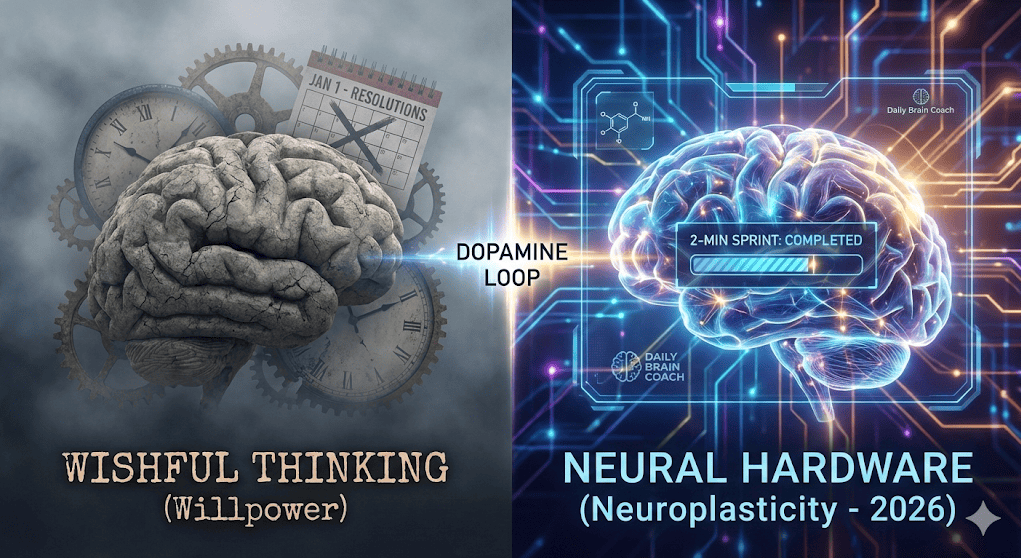
The good news? Modern science has fully debunked the myth that the brain stops developing after childhood. Thanks to neuroplasticity, your brain can reshape itself, create new synapses, and even generate new neurons. All it needs is gentle, consistent stimulation — exactly what the games below provide. To get started right away, try our memory exercises online for seniors.
Why 5 Minutes a Day Makes a Huge Difference
Many people believe that cognitive training requires hours of intense study. In reality, the opposite is true. Forcing yourself to solve complex puzzles for an hour can lead to mental fatigue and frustration, which actually hinders learning.
Neuroscience research suggests that short, frequent bursts of mental activity are far more effective. A 5-minute routine practiced daily helps consolidate memory and improves "fluid intelligence"—the ability to solve new problems and adapt to new situations.
The Power of Fun: Why Stress is the Enemy of Memory
When you are stressed, your body releases cortisol. Chronic high levels of cortisol can actually shrink the hippocampus, the part of the brain responsible for forming new memories. This is why many "brain training" apps fail: they use flashing red timers and loud buzzers that trigger anxiety.
For an exercise to be effective, it must be enjoyable. When you enjoy a game, your brain releases dopamine, a neurotransmitter that signals to your neurons: "This is important, remember this!" Combining mental games with light physical activity, like a 20-minute walk, is the ultimate "power combo" for brain health.
Top 7 Free Brain Games You Can Do at Home
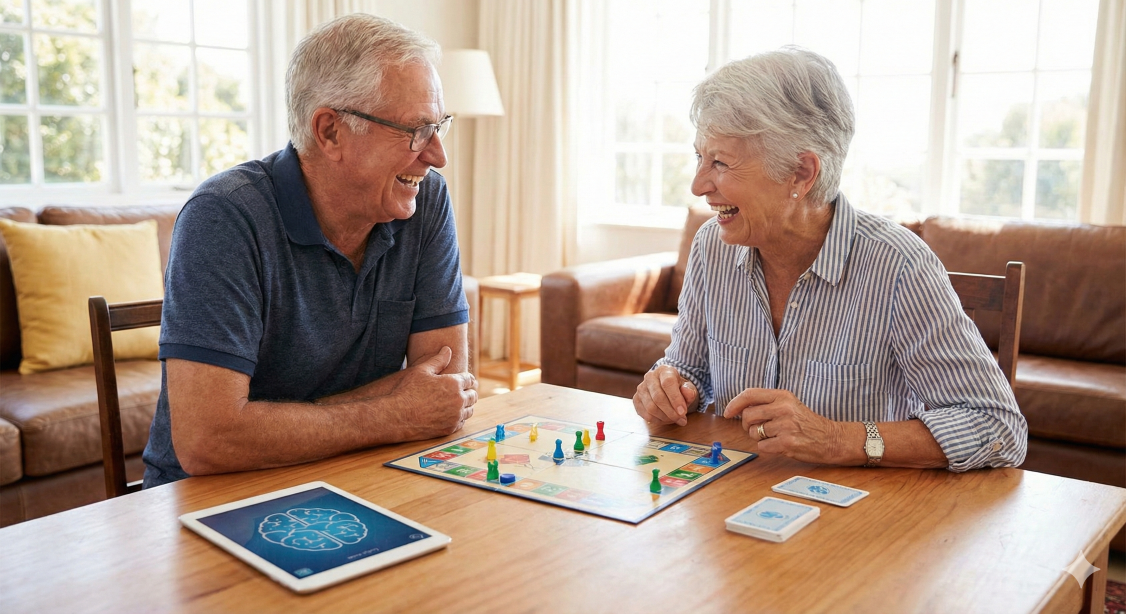
You don't need a subscription or expensive software to start. Here are some simple, effective exercises to target different cognitive functions.
1. Visual Card Matching
Take a standard deck of cards. Place 12 cards face down in a grid. Flip two over at a time to find pairs. As you get better, increase the number of cards.
- Benefit: Works on short-term visual memory and focus. Try our digital version: Online Visual Memory Game.
2. The "Active Recall" Reading Method
Read a news article or a book chapter. Close the book and write down (or say aloud) three things you learned.
- Benefit: Improves encoding—the process of moving information from short-term to long-term memory.
3. Verbal Agility: The Category Game
Pick a category (e.g., "Types of Flowers" or "European Cities") and try to name 10 items in 30 seconds.
- Benefit: Strengthens verbal retrieval and fights the "tip of the tongue" syndrome.
4. Sound Identification
Sit quietly for two minutes. Close your eyes and try to identify five distinct sounds (the hum of the fridge, a distant bird, the wind).
- Benefit: Enhances auditory attention, which is vital for following conversations in crowded rooms. Check out our online symbol search exercise.
5. Simple Sudoku
You don't need to be a math whiz. Sudoku is about patterns and logic. Start with "Easy" grids to build your confidence.
- Benefit: Sharpens logical reasoning and working memory.
6. Reverse Spelling
Pick a word (like "GARDEN") and try to spell it backward ("NEDRAG"). Start with 4-letter words and work your way up.
- Benefit: Increases mental flexibility and concentration.
7. Mindful Grocery Shopping
Try to memorize your shopping list of 5 to 7 items instead of writing them down. Use "chunking" (grouping items by aisle) to help.
- Benefit: Exercises real-world functional memory. Also, try our free mental math game.
The Daily Brain Coach Advantage: Stress-Free Progress
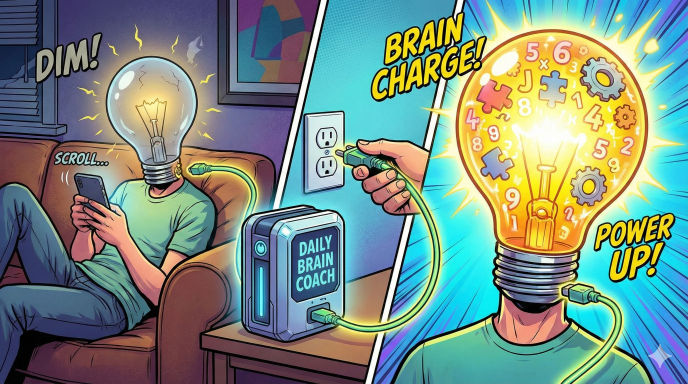
While paper puzzles are a great start, they don't provide feedback or track your improvement over time. Daily Brain Coach bridges the gap between traditional games and modern science:
- No Stressful Timers: We believe you should compete with yourself, not a clock.
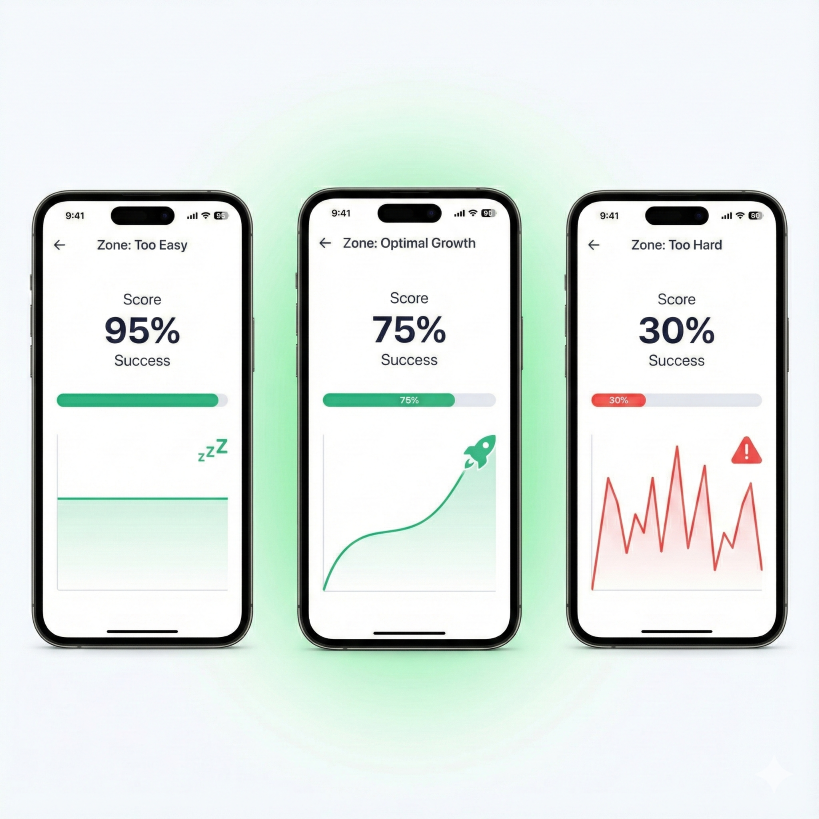
- Personalized Difficulty: Our AI adapts to your level. If you're struggling, the game gets easier. If you're breezing through, we'll give you a gentle challenge.
- Holistic Tracking: See exactly which areas of your brain are getting stronger—whether it's focus, memory, or logic.
The Neuroscience of Memory After 60: What Research Actually Shows
For decades, medicine taught that the adult brain was fixed — that after 25, you only lost neurons. That view is now completely overturned.
Cognitive neuroscience has demonstrated that the adult brain, including after age 70 and 80, retains significant neuroplasticity. Two key mechanisms:
- Long-term potentiation (LTP): every time a neural circuit is stimulated repeatedly, the synaptic connection strengthens. This is literally the physical mechanism of learning.
- Hippocampal neurogenesis: studies on the hippocampus (memory center) show that new neurons can form even in older adults — provided there is regular stimulation and an active lifestyle.
Merzenich et al. (2013, PNAS) showed that adults aged 60–80 undergoing adaptive cognitive training over 10 weeks achieved working memory gains comparable to subjects 20 years younger. The key condition: training must be adaptive — difficulty increases as you improve, keeping the brain in its zone of proximal development.
Which Games Actually Activate Memory?
Not all games are equal. A game you have mastered no longer stimulates much — your brain runs it on autopilot. For plasticity to activate, you need novelty and calibrated difficulty.
| Game type | Brain region | Memory benefit |
|---|---|---|
| Card matching / pairs | Hippocampus, parietal cortex | Visual encoding, episodic memory |
| Mental math | Prefrontal cortex, parietal areas | Numerical working memory |
| Stroop Test | Anterior cingulate cortex | Inhibition, selective attention |
| N-Back | Dorsolateral prefrontal cortex | Working memory update |
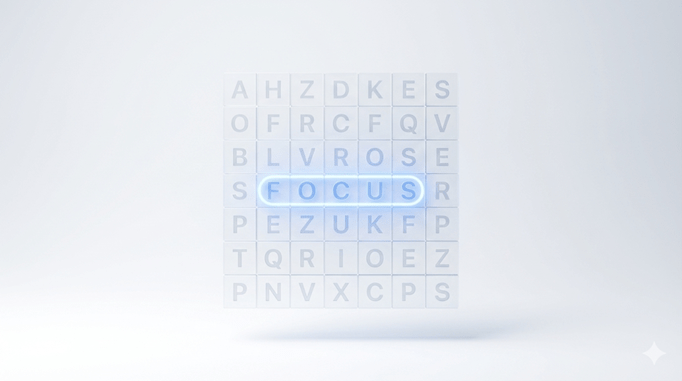
| Word Search | Left temporal networks | Semantic memory, verbal fluency |
Word Search is particularly effective for seniors because it combines visual scanning, pattern recognition, and lexical retrieval — three processes that tend to slow with age.
How Much Daily Training Is Actually Needed?
The counter-intuitive answer: less than you think, but more consistently.
Ball et al. (2002, JAMA) followed 2,832 older adults in the ACTIVE study. Results: 10 sessions of 60 minutes over 5–6 weeks produced lasting improvements in memory and processing speed — and these gains persisted 5 years post-intervention.
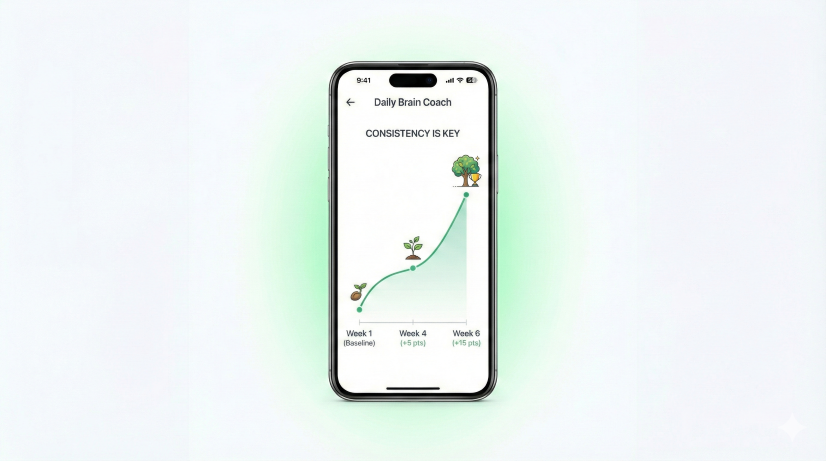
For daily autonomous practice, research suggests 5–10 minutes per day of targeted stimulation outperforms 45 minutes weekly. The brain consolidates learning during sleep — frequent micro-sessions give it more opportunities to consolidate.
Linking Exercises to Your Daily Life
The most common mistake: treating cognitive exercises as a chore separate from real life. The most effective exercises are those that integrate naturally:
- Morning with coffee: 5 minutes of mental math before reading the news — the brain is fresh, overnight consolidation just finished.
- After a nap: ideal for a visual memory exercise — the hippocampus just consolidated morning learning.
- Evening: vocabulary or word recognition exercises — less attention-demanding, perfect for winding down.
Tracking Progress: Why It Matters
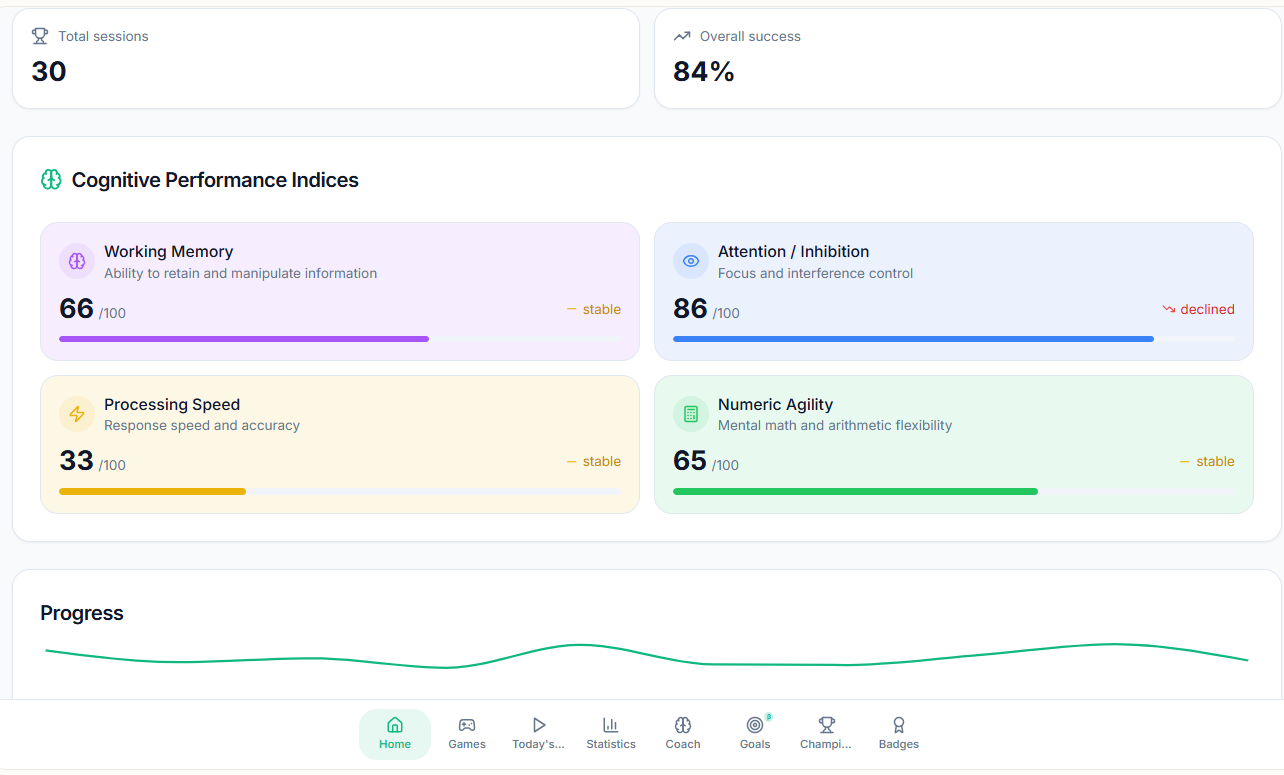
A cognitive progress log — even a simple one — multiplies the effectiveness of training. Seeing progress releases dopamine, which reinforces motivation to continue. It becomes a virtuous cycle.
The cognitive indices dashboard measures four dimensions after every session:
- Memory index: working and episodic memory
- Attention index: inhibition and selective concentration
- Speed index: information processing speed
- Numeric index: quantitative reasoning
Start your free trial — no account, no credit card, results visible within 2 weeks.
Conclusion: It’s Never Too Late to Start
Investing in your brain health is the best gift you can give your future self. By mixing traditional hobbies with a modern brain training routine for seniors, you can maintain your independence and keep your mind sharp for years to come.
Ready to give your brain a workout?
Join thousands of active seniors using Daily Brain Coach to stay sharp and confident.
Frequently Asked Questions (FAQ)
Is Daily Brain Coach suitable for people with no tech experience?
Absolutely. We designed the interface with seniors in mind: large buttons, clear instructions, and no complicated menus. If you can read this article, you can use the app!
Do I need to pay for the exercises?
We offer a range of free exercises so you can experience the benefits immediately. For those who want a deep dive with personalized coaching and progress reports, we offer affordable premium plans.
How soon will I see results?
Most users report feeling more "mentally alert" after just two weeks of daily 5-minute sessions. Consistency is the key to long-term cognitive health.